


Selective
Laser
Melting
Take advantage of our leading position
Thanks to our many years of expertise across a wide range of fields
- Additive manufacturing:
- 316L stainless steel
- Aluminium AlSi10Mg
- SLM using various alloys
- Mechanical finishing (CNC milling and turning, EDM, grinding)
- Coating (powder or liquid paint, chemical and electroplating processes)
- Powder Batch Control
- Traceability of builds and the components they contain
- Automated post-processing procedures
- Heat treatment
- 3D scanning
- Combinations of technologies
- Experience with assemblies
- FDM printing with all common materials
- Sourcing of plastic AM components using SLS or MJF processes
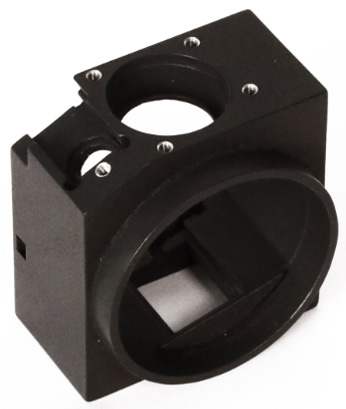
Selective Laser Melting manufacturing process
Layered structure
SLM is an additive manufacturing process. It involves two steps. In the first step, a thin layer of metal powder is applied. A laser then melts the powder at the desired locations and solidifies it. This process is repeated until the component is complete.
Low-waste production
Metal powder that has not been fused during the production process is sieved and reused. Material loss is very low.
Terms
This manufacturing process is known by various names:
- Metal 3D printing
- Selective Laser Melting (SLM)
- Direct Metal Laser Sintering (DMLS)
- LaserCUSING®
- Near Net Shape Manufacturing
Good weldability
All metals that are easy to weld are suitable for 3D printing. However, the ideal production conditions – such as laser power – vary from metal to metal.
The advantages of Selective Laser Melting technology
Functional integration
With SLM technology, you can create complex geometries through layer-by-layer build-up – something that was virtually impossible with previous manufacturing processes. Instead of producing individual parts and assembling them, you manufacture the functional component in a single step.
Weight & Cost Reduction
Thin walls, skeleton structures, cavities with internal lattice structures or internal channels: 3D printing makes it possible to reduce the weight – and therefore also the cost – of components. This makes the technology appealing for many applications
Prototypes & Series Production
Our 3D-printed metal components have a density of 99.8 per cent or more. This figure is verified at regular intervals by certified laboratories. The material properties are on a par with those of traditionally manufactured metal parts.
Production from CAD files
With 3D printing, the component is produced directly from a CAD file, and a drawing based on detailed 2D plans is not strictly necessary.
When combined with 3D scanning, this opens up new possibilities for replicating a one-off item, for example to create a spare part.